
Big changes often attract the most attention. Large campaigns, major investments, and ambitious development projects can make headlines and create visible results. But meaningful community change does not always begin with something large.
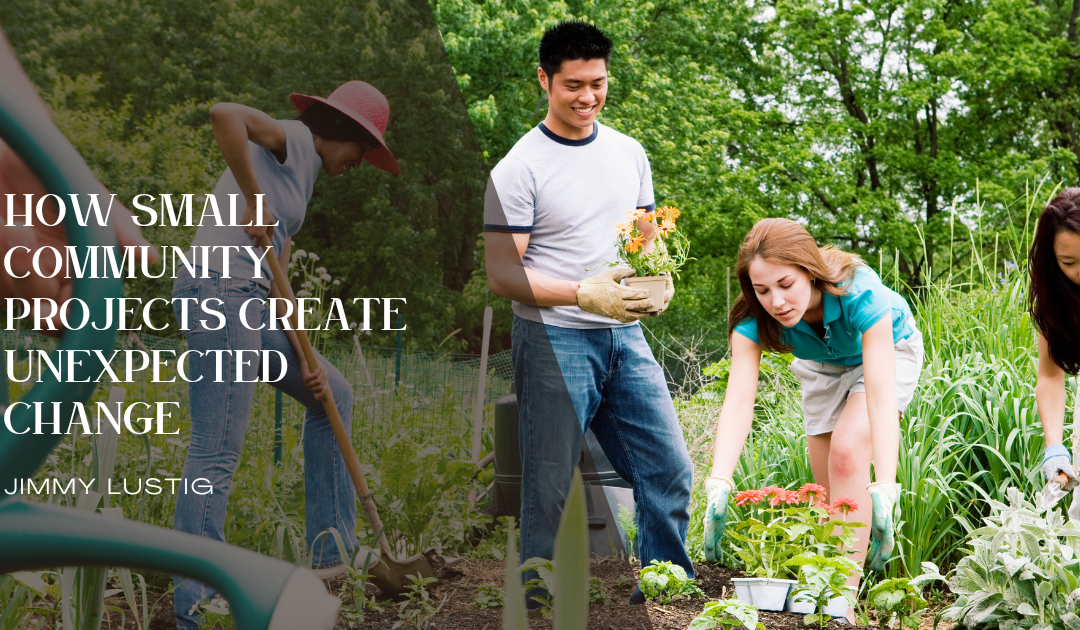
Sometimes, it starts with a few neighbors planting flowers in an unused space, students organizing a book exchange, or residents creating a weekly gathering for older people. These projects may appear small at first, but their influence can extend far beyond their original purpose.
Small Actions Can Build New Connections
One of the most valuable outcomes of a small community project is often something that was never part of the original plan: connection.
Consider a neighborhood cleanup. The initial goal might simply be to improve a park or public space. But while working together, residents who rarely interacted may start talking, sharing ideas, and learning more about one another.
That simple interaction can create relationships that continue long after the cleanup is finished.
Over time, these connections can make communities more cooperative and supportive. People become more comfortable asking for help, sharing resources, and working together when new challenges appear.
Small Projects Can Reveal Bigger Problems
A local project can also help communities discover issues that were previously overlooked.
For example, a group organizing activities for children might realize that many families have limited access to transportation. A community garden may reveal concerns about food access. A youth event might show that teenagers lack safe places to spend time after school.
The original project may not solve these larger problems, but it can bring them into focus.
Once people understand an issue more clearly, they can begin looking for broader solutions.
Participation Creates Ownership
People are more likely to care about something when they have helped create it.
A community space designed and maintained by local residents can feel very different from one that was created without their involvement. The same principle applies to youth programs, neighborhood events, educational initiatives, and local improvement projects.
Participation creates a sense of ownership.
Instead of thinking, “Someone should fix this,” people begin thinking, “What can we do about this?”
That shift in mindset can be one of the most powerful outcomes of a small project.
Small Successes Build Confidence
Communities can sometimes feel overwhelmed by large challenges. Problems such as isolation, limited resources, environmental concerns, or educational gaps may seem too complicated for a small group to address.
Small projects provide a different starting point.
When people successfully complete something manageable, they gain confidence. A group that organizes one successful community event may later feel capable of launching a mentoring program. Students who complete a small environmental project may become interested in larger sustainability efforts.
Success creates momentum.
Unexpected Leaders Can Emerge
Small projects can also reveal leadership potential in people who might never consider themselves leaders.
Someone who volunteers to coordinate a few neighbors may discover strong organizational skills. A quiet student might become an excellent project planner. A resident who simply wanted to help may become a trusted community advocate.
These opportunities allow leadership to develop naturally through action rather than titles.
The Ripple Effect Matters
The impact of a community project should not always be measured by its immediate results.
A single reading program might encourage a child to develop a lifelong interest in books. One community conversation might lead to a new partnership. A small garden might inspire residents to think differently about local food and shared spaces.
The original project may end, but its influence can continue through the people it connects and the ideas it inspires.
Start Small, Think Beyond the Project
Communities do not need to wait for perfect funding, large organizations, or major initiatives before taking action.
A small project can be enough to begin.
The key is to choose something meaningful, involve the people affected by it, and remain open to what happens next. The most valuable result may not be the one written in the original plan.
Sometimes, a small project changes a space. Sometimes, it changes relationships. And sometimes, it changes the way an entire community sees what is possible.
That is the unexpected power of starting small.